

Safety is a priority for both members and the Cooperative when the power is out.
Being prepared is key and more information can be found at Red Cross.
While winter storms are few and far between in North Carolina, with our unpredictable weather, it's always best to be prepared. Making sure you have supplies and plans are a must any time a serious storm is forecasted.
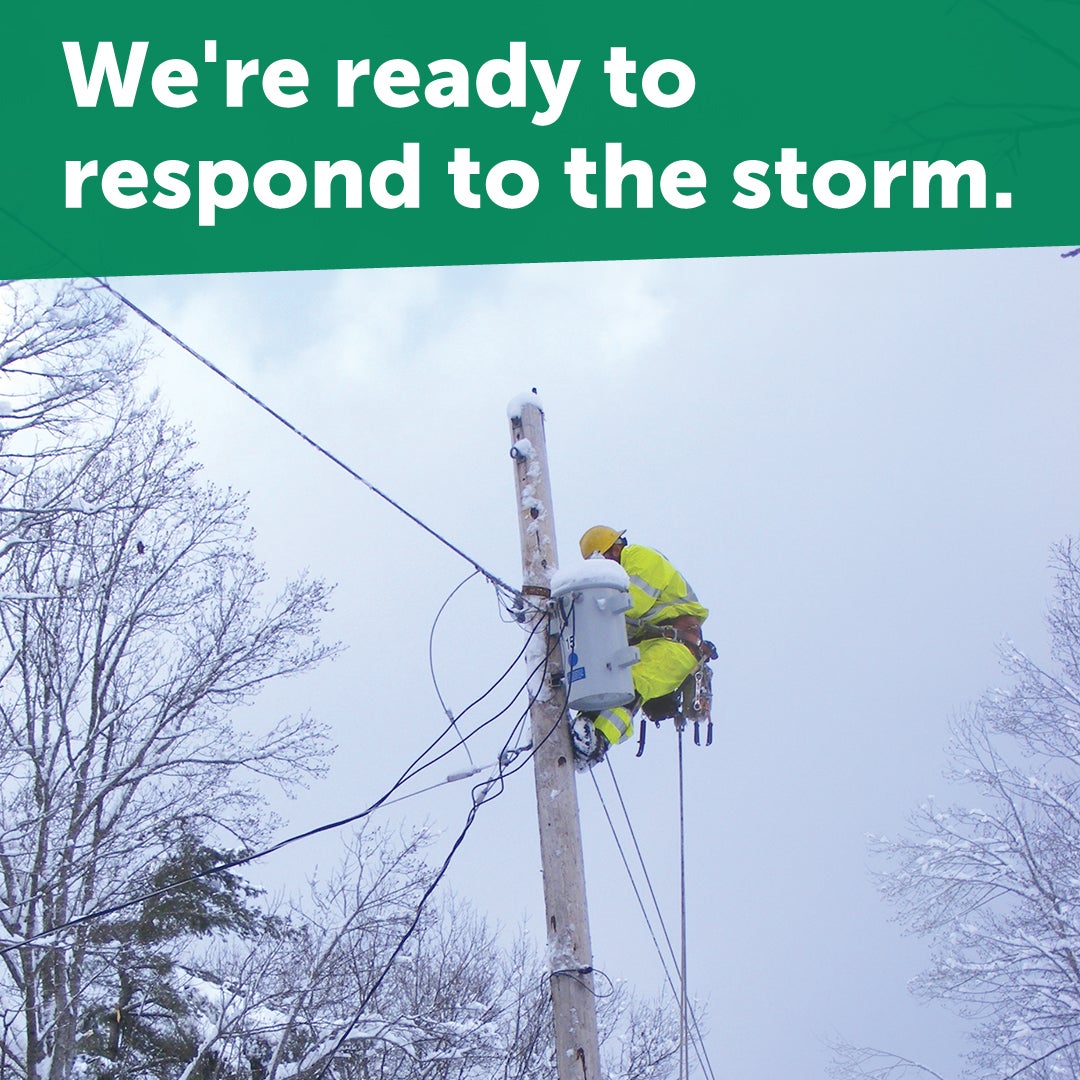
In the event of any outage, crews from South River EMC work round the clock to restore electric service to its members as quickly as possible. We work to restore power to the largest population of members the quickest. Transmission lines and substations are given top priority for repair since this will restore power to hundreds or thousand of people. Next, primary distribution feeders are restored starting with three phase lines, to second phase lines and lastly individual service drops.
Click here for more information on how we restore power following a storm. Remember whenever bad weather strikes our area there is the potential for a loss of electric service, it is a good idea to know what to do if the power goes out.
|
Water: one gallon per person, per day (3-day supply for evacuation, 2-week supply for home) |
Food: non-perishable, easy-to-prepare items (3-day supply for evacuation, 2-week supply for home) | Copies of personal documents (medication list and pertinent medical information, proof of address, deed/lease to home, passports, birth certificates, insurance policies) |
|
Medications (7-day supply) and medical items, including supplies like: hearing aids with extra batteries, glasses, contact lenses, syringes, etc. |
Multi-purpose tool | Extra cash |
|
First aid kit |
Flashlight | Baby supplies (bottles, formula, baby food, diapers) [if applicable] |
|
Extra batteries |
Manual can opener | Games and activities for children [if applicable] |
|
Battery-powered or hand-crank radio (NOAA Weather Radio, if possible) |
Family and emergency contact information | Pet supplies (collar, leash, ID, food, carrier, bowl) [if applicable] |
|
Emergency blanket |
Cell phone with chargers | Extra set of car keys and house keys |
|
Sanitation and personal hygiene items |
Map(s) of the area |
Two-way radios |
In recent years many people have purchased portable generators to get through these outages with the least amount of inconvenience. If you are operating a portable generator, read all instructions carefully. Never run a generator in the home or plug the generator into your homes electrical system. This can cause a danger for electrical workers. Also, be sure you turn your generator off before refueling.
Click here for tips on How To Operate A Portable Generator Safely.
Safety is a priority for both members and the Cooperative when the power is out.
Being prepared is key and more information can be found at Red Cross.